Partner with our experts for contract manufacturing services.
Outsourcing the production of goods can be beneficial in many circumstances, allowing a company to focus on product design, marketing, sales, or other core functions while leveraging the production capabilities of a manufacturer. This business model, called contract manufacturing, is used in many industries, such as the pharmaceutical, electronics, automotive, food & beverage, and cosmetics & personal care industries. If contract manufacturing is right for your operation, partner with our team at AccuSpec Fabrication and let us handle your production needs.
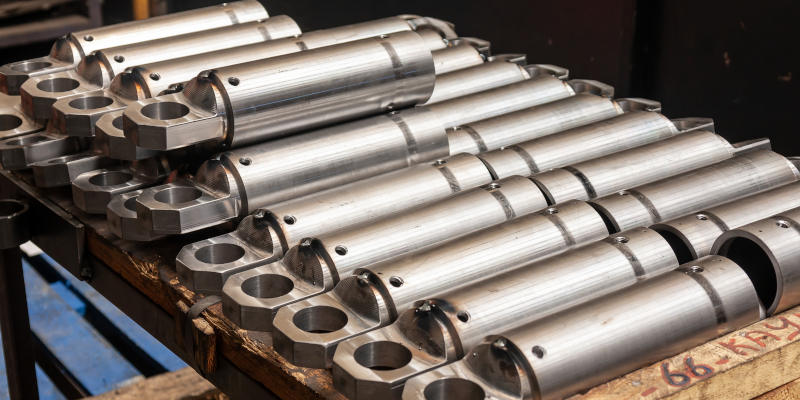
When you trust our company for contract manufacturing services, you not only reduce costs—since there is no need for your company to invest in production facilities or equipment—but you also allow for easier scalability and faster turnaround. Furthermore, you get access to our specialized knowledge as experienced contract manufacturers. We understand our role in the process, and we are dedicated to streamlining your entire process through our production capabilities and ensuring the products meet the highest standards in terms of quality.
Our contract manufacturing services are tailored to each client’s requirements. However, a Contract Manufacturing Agreement (CMA) typically includes the following: product design and development, procurement of raw materials, production and assembly, quality control and testing, packaging and labeling, and logistics and delivery. We will discuss the terms of our agreement in detail, and you will have the opportunity to ensure the contract meets your needs and keeps certain protections in place, such as confidentiality and IP ownership clauses.
We proudly serve College Station and Bryan, Texas. Contact us today to learn more about our contract manufacturing services.
🔹 What Contract Manufacturing Includes
Contract manufacturing services can cover the following:
• Product design and development
• Procurement of raw materials and components
• Production and assembly
• Quality control and testing
• Packaging and labeling
• Logistics and delivery
🔹 Industries That Commonly Use Contract Manufacturing
• Pharmaceuticals – formulation, packaging, labeling
• Electronics – PCB assembly, consumer devices
• Automotive – components, sub-assemblies
• Food & Beverages – private label or co-packing
• Cosmetics & Personal Care – formulation, filling, packaging
• Medical Devices – prototyping, sterilization, and packaging
🔹 Benefits
✅ Cost Efficiency – no need to invest in production facilities or equipment.
✅ Expertise Access – use manufacturers with specialized knowledge.
✅ Scalability – easily adjust production volume.
✅ Speed to Market – faster turnaround from design to product delivery.
🔹 Risks & Challenges
⚠️ Quality Control – maintaining standards across third parties.
⚠️ Intellectual Property (IP) Protection – safeguarding proprietary designs and formulas.
⚠️ Supply Chain Dependence – disruptions can halt production.
⚠️ Communication Barriers – especially with overseas manufacturers.
🔹 Typical Contract Structure
A Contract Manufacturing Agreement (CMA) usually includes the following:
• Product specifications and quality requirements
• Production schedules and minimum order quantities (MOQs)
• Pricing, payment terms, and cost adjustments
• Confidentiality and IP ownership clauses
• Inspection, testing, and rejection procedures
• Termination and liability terms
At AccuSpec Fabrication, we offer contract manufacturing services for customers in Bryan, College Station, Dallas, Austin, Fort Worth, Midland, Conroe, Houston, Hempstead, San Antonio, Brenham, and Caldwell, Texas.